Timecraft
Curators:
Gilat Ben Arie, Meital Sivan Shani, Eitan Ben Arie
Artists:
Neta Shaik,Najwan Faruja,
Hadar portnoy nerubay
Ala Raniyets Dunaisky
Photos
Ala Raniyets Dunaisky
Group Exhibition
Givat Haim Ihud Gallery
Time does more than measure the distance from the past; it transforms the way we remember it.
As time passes, memory fragments, omits, emphasizes, folds, and reconstructs experience. The past ceases to be a fixed sequence of events and becomes living material, subject to ongoing interpretation and transformation.
The four artists participating in this exhibition work within this space. By revisiting emotionally charged places, reworking personal memories, collecting fragments of moments, and tracing the marks left by time, they seek not to reconstruct what once was, but to explore how it continues to exist in the present.
In their work, memory is not merely a testimony to the past, but a creative act capable of giving new meaning to what once seemed complete.
The exhibition invites us to consider time as a space in which the past continues to evolve, and where new possibilities of meaning emerge in the space between memory, absence, and presence.
Details
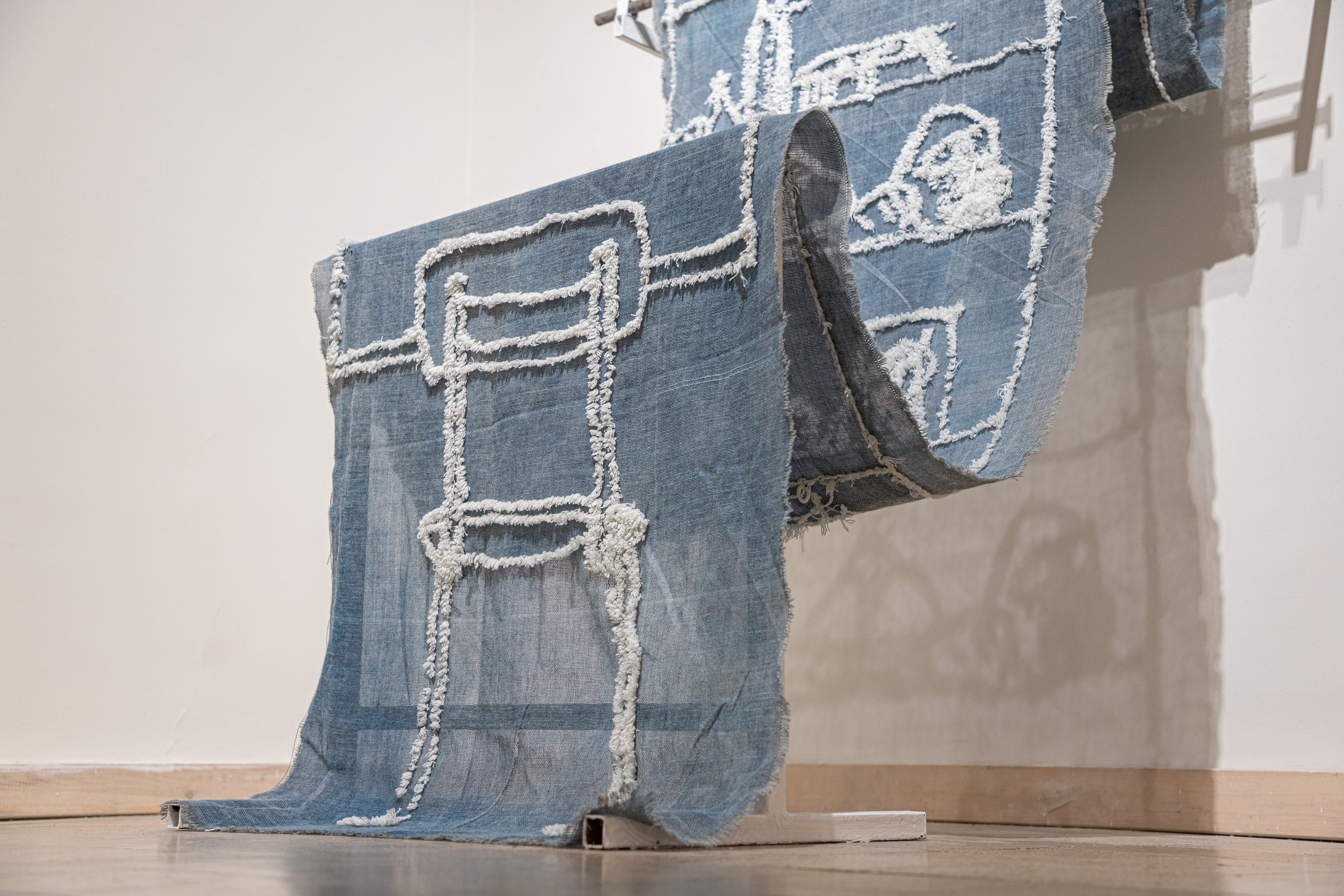
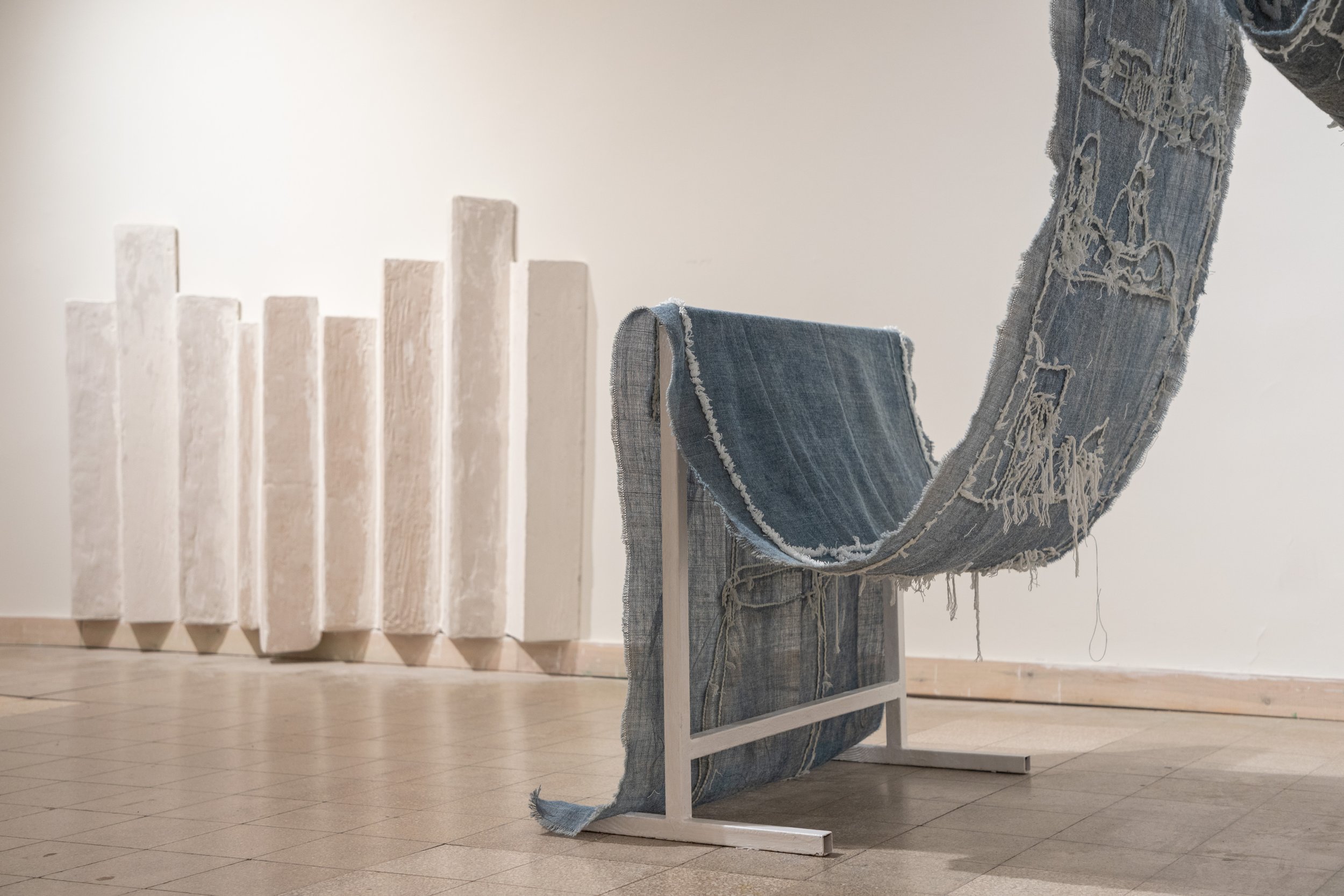
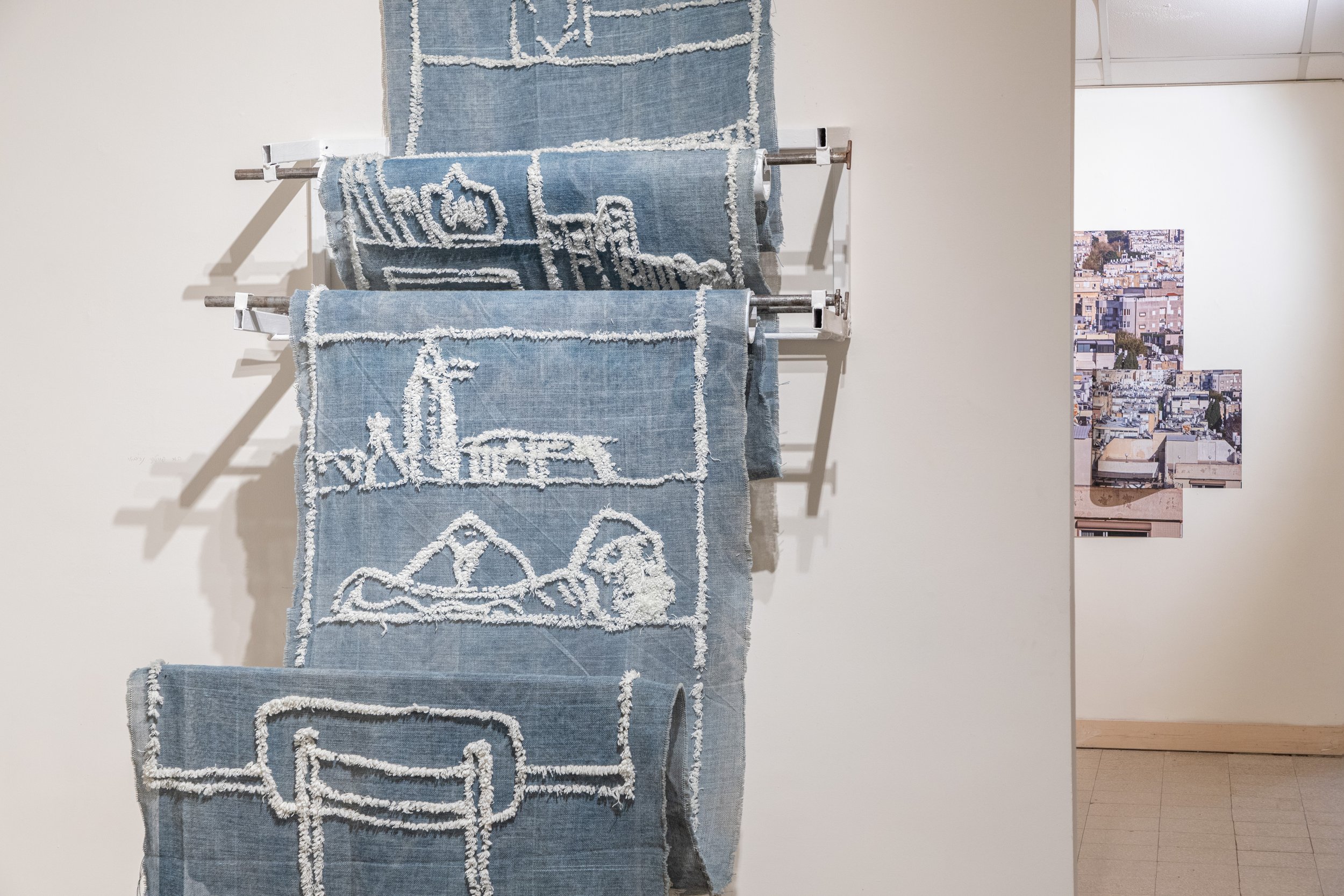
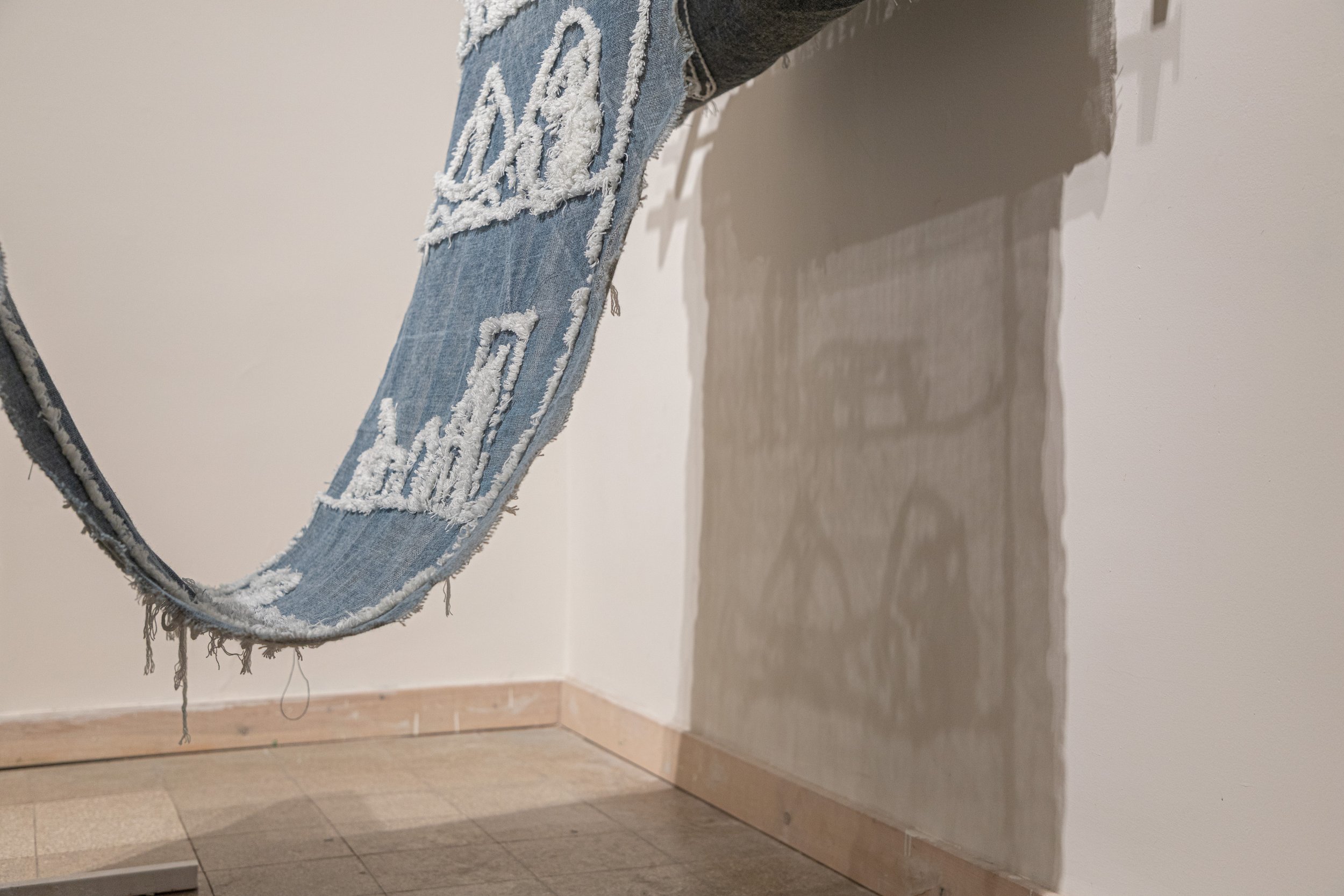
Library
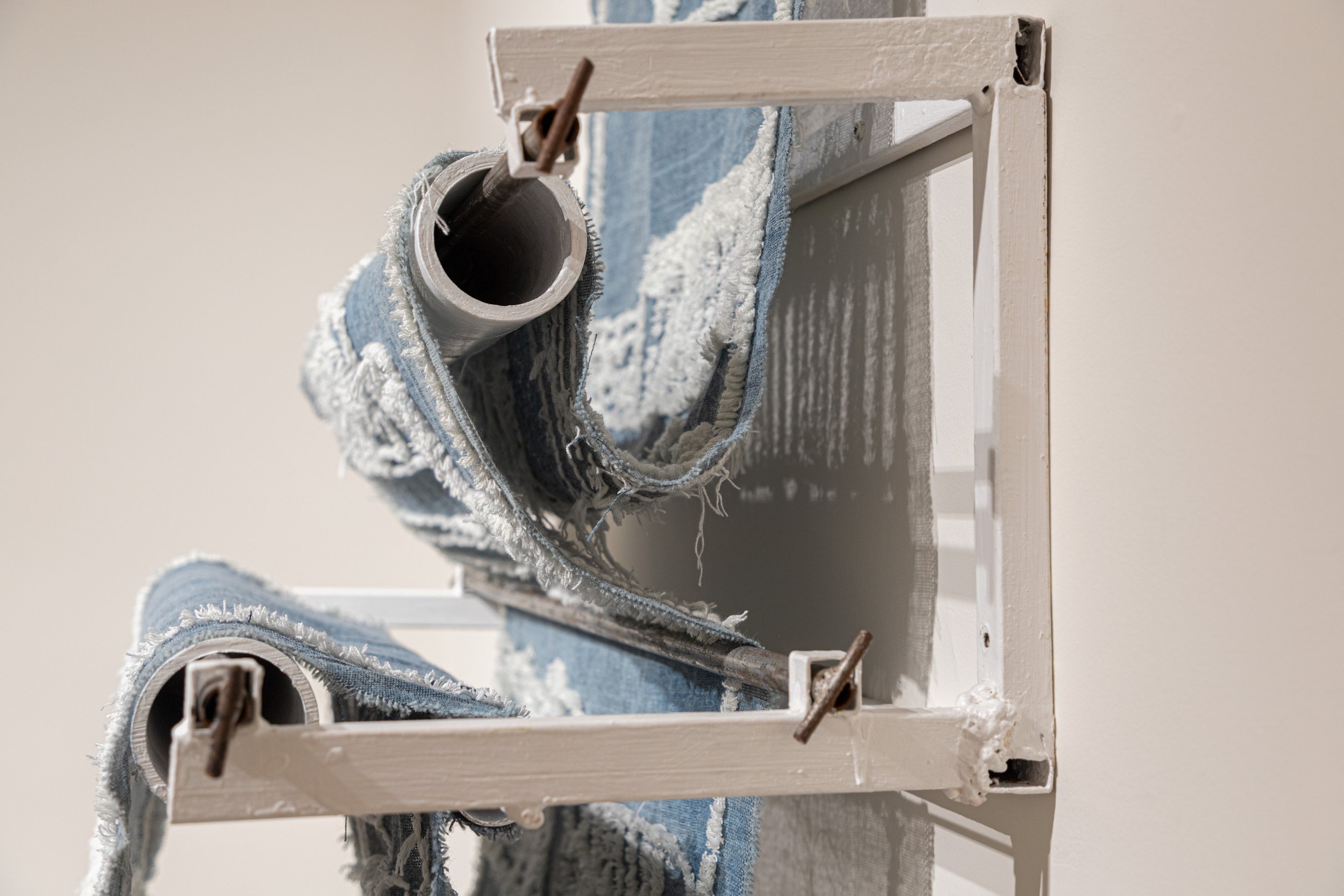
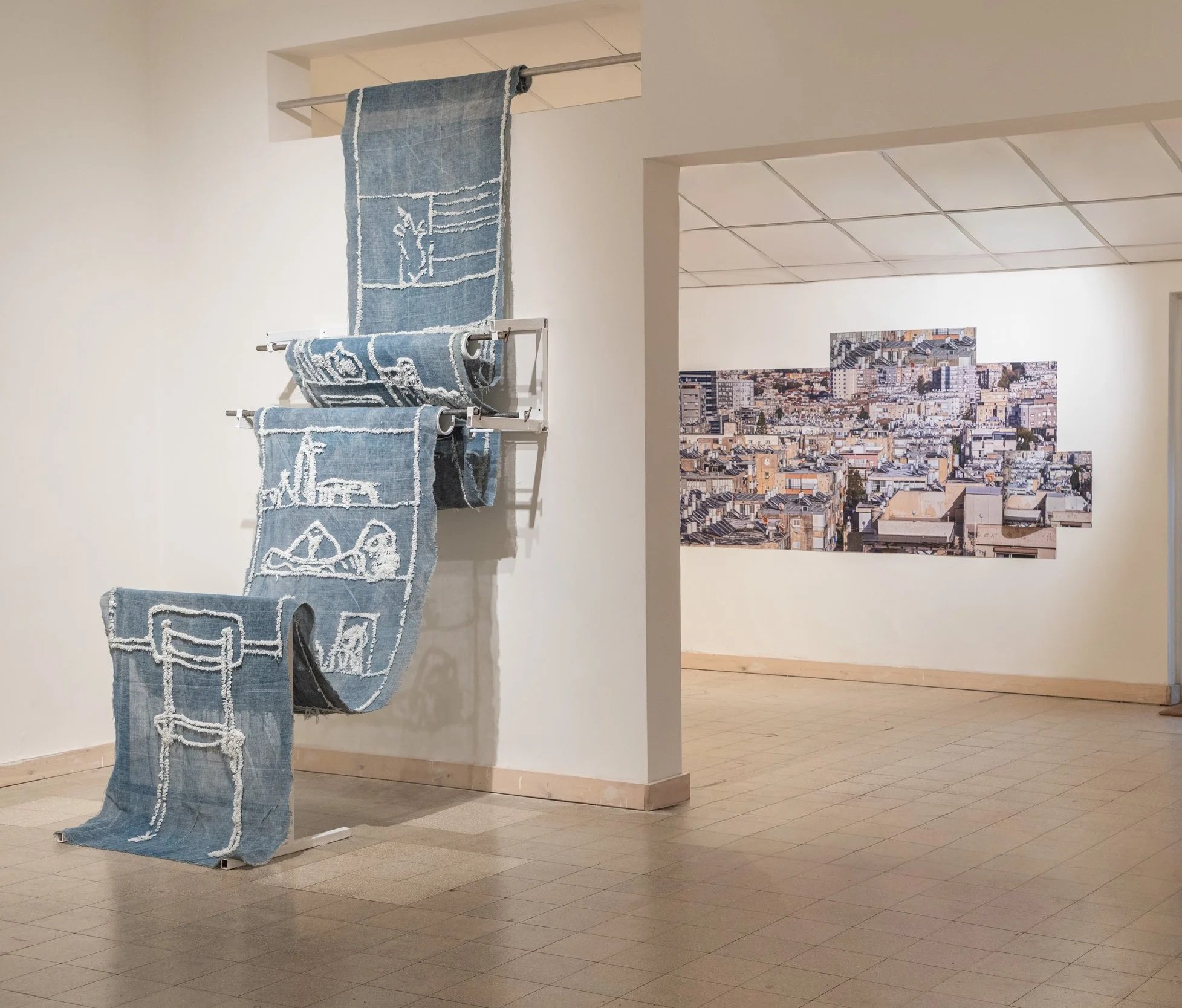
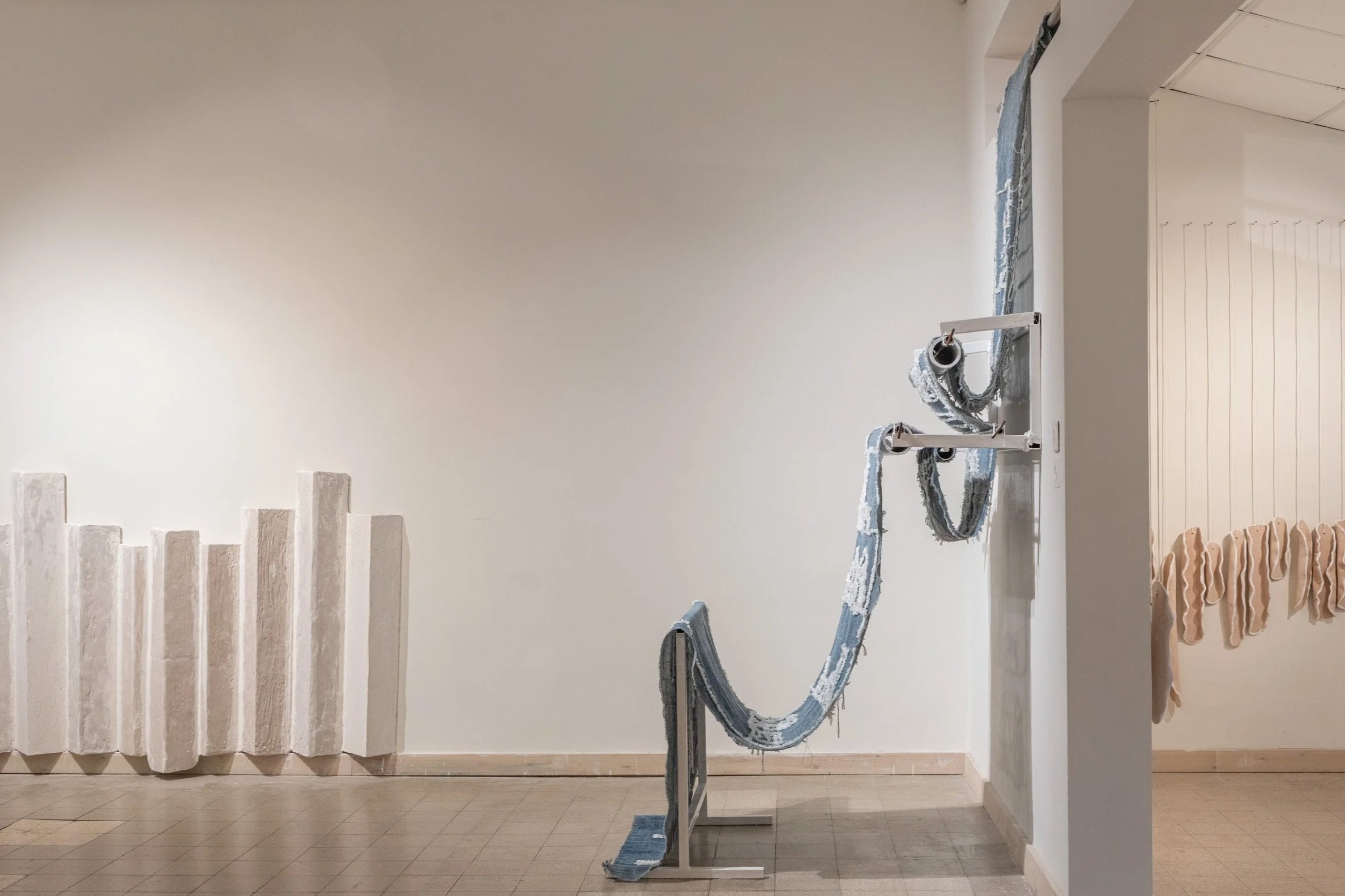
Cyanotype-dyed fabric with tufted line embroidery, rolled onto an iron structure.
A six-meter-long blueprint of a library, rolled up and holding within it two moments in time: the bookshelf in my son's room on the eve of his military enlistment, and the one that stood frozen in time in the room of my uncle, who was killed in the Yom Kippur War.
The image is never fully revealed. Instead, it remains folded, concealed, and encapsulated.
Fabric dimensions: 100 × 600 cm
Installation dimensions: 200 × 110 × 230 cm
Blackout Curtain (1)
2025
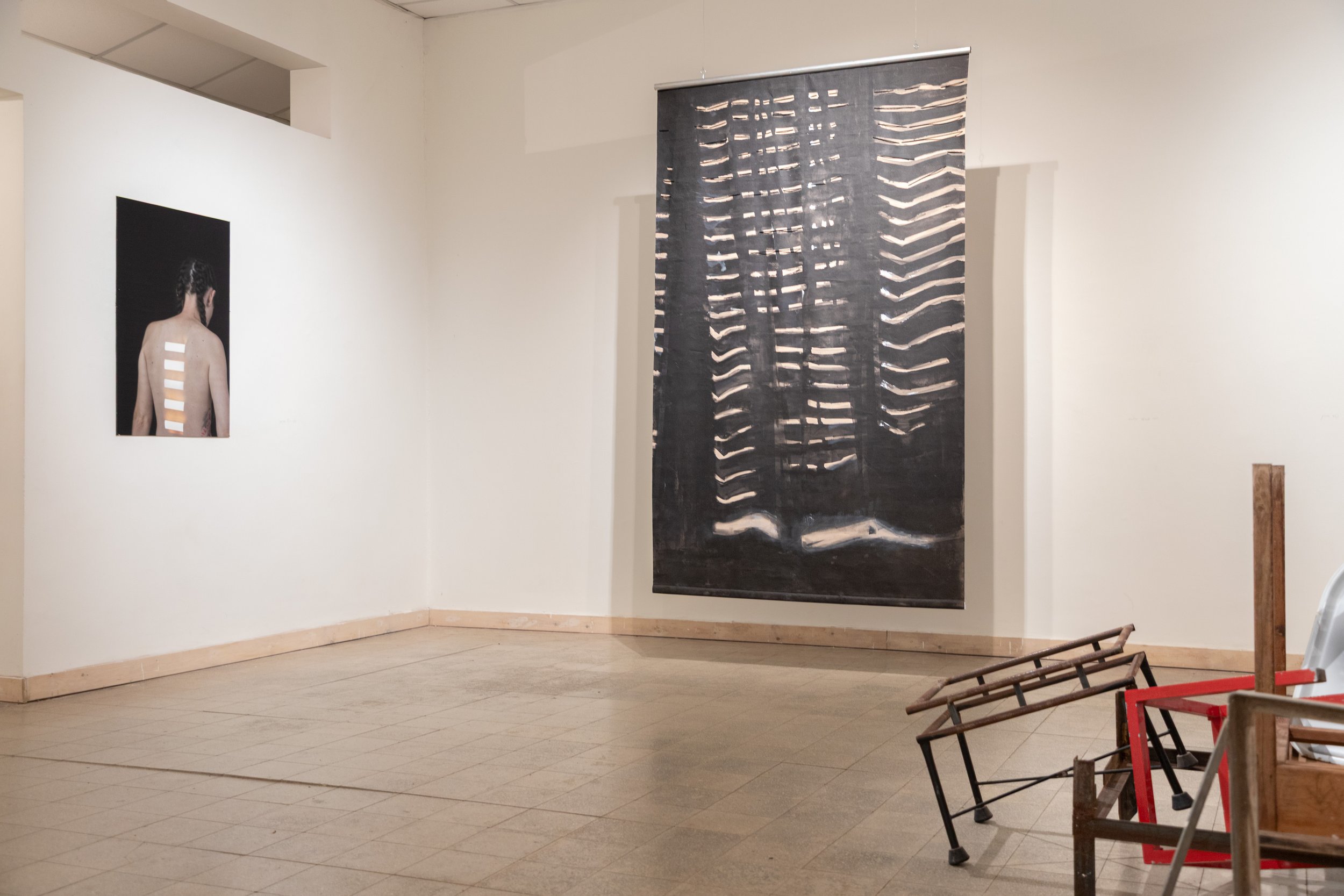
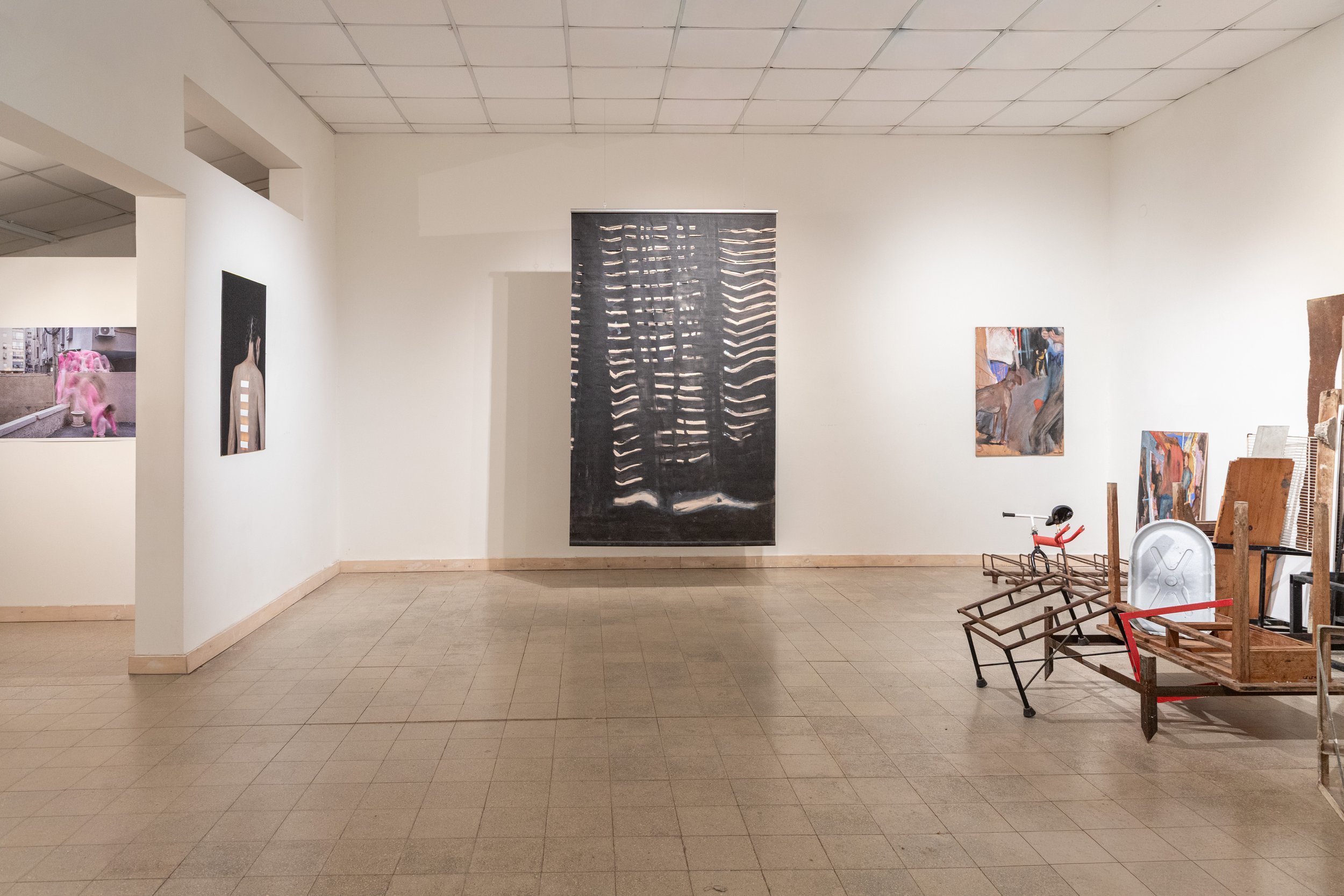
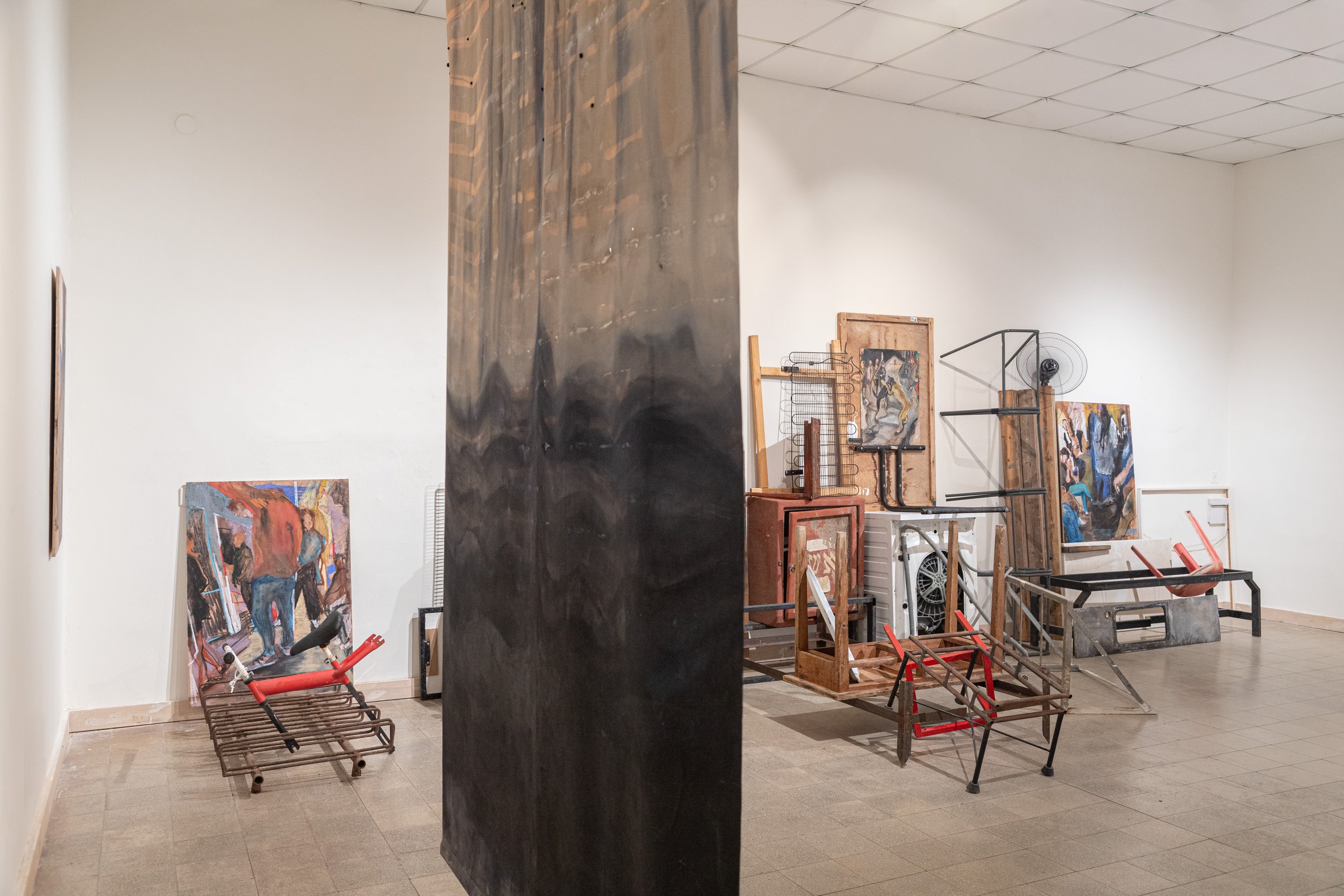
Double-sided painting, mixed media
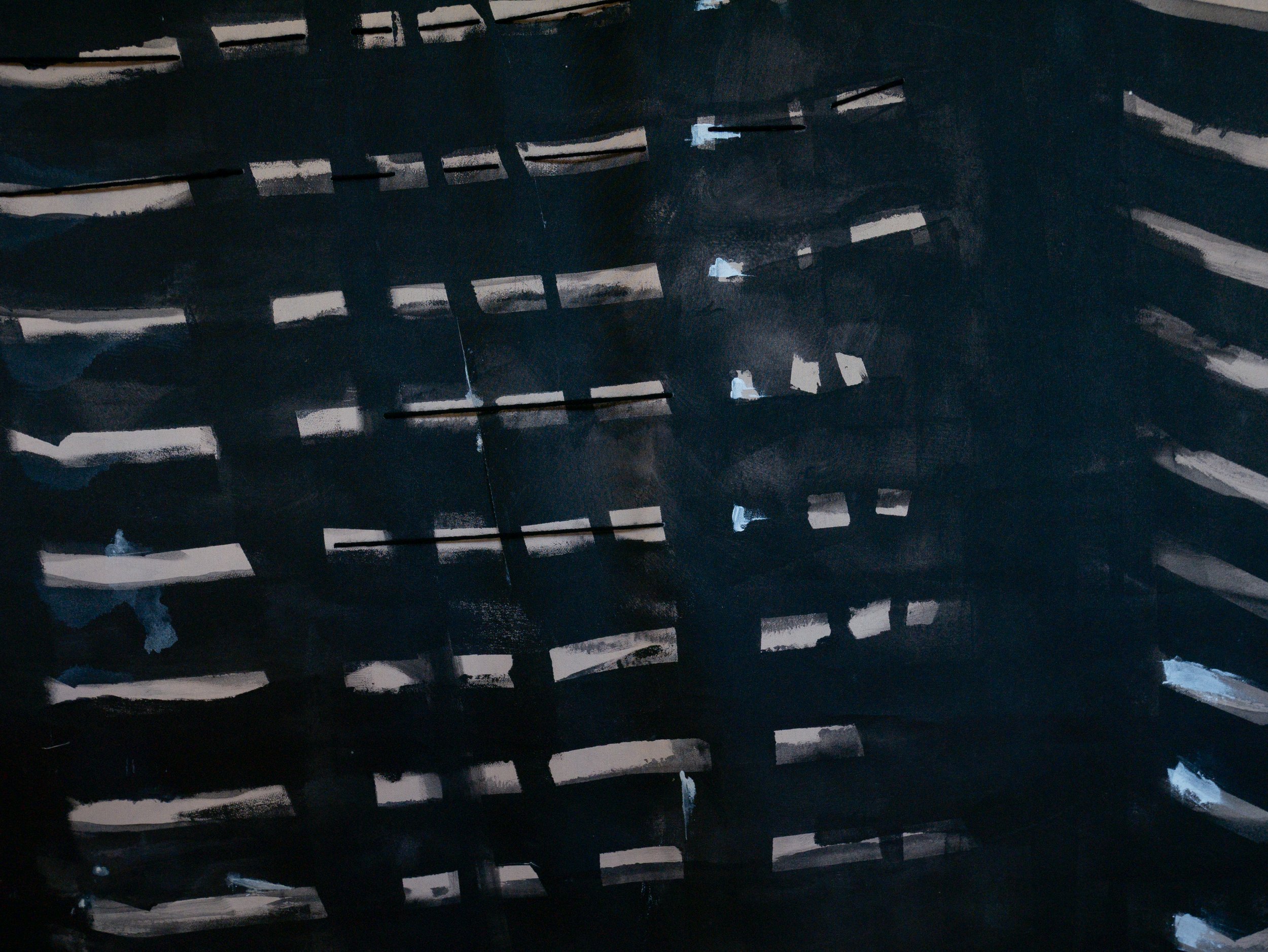
Side 1: Acrylic and stitching with black acrylic yarn
Side 2: Acrylic, oil monoprint, and thread
Burnt edges
Dimensions: 139 × 228 cm
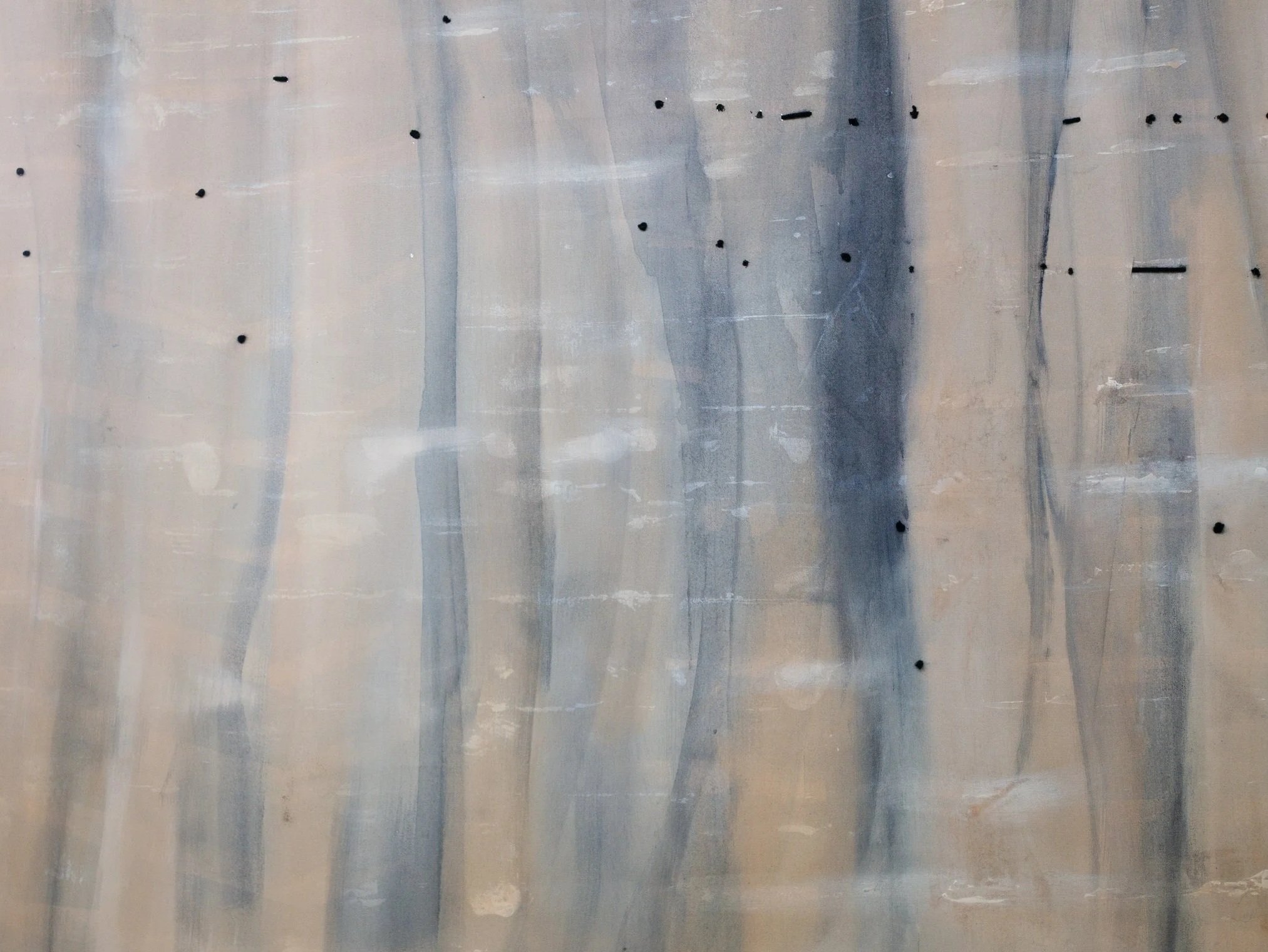
The work, created on a blackout curtain, operates on two planes. On one side, a closed window is depicted, with light filtering through shutters resembling a skeleton or giant ribs. On the other, a window with a curtain opens onto a landscape.
While a continuous black thread is embroidered across one side, only severed and burnt ends remain on the reverse. This loss of continuity leaves small marks scattered across the surface, creating a fragmented rhythm, like a coded language in which absence and discontinuity transform the act of embroidery from a gesture of material repair into a testimony to disintegration and rupture.
Details